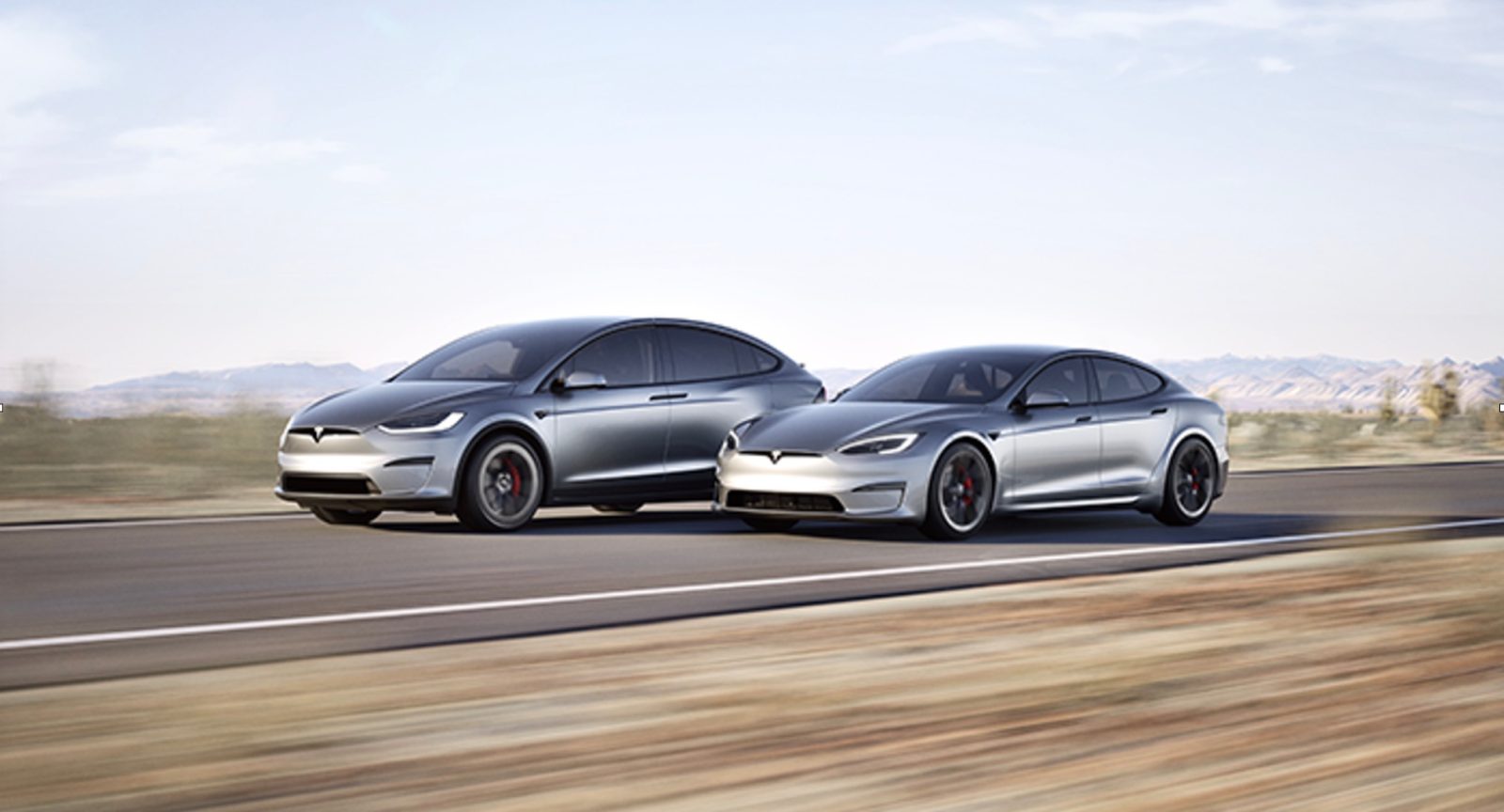
Elon Musk confirmed today that Tesla has stopped producing the Model S and Model X. Custom orders are no longer accepted, and only about 600 vehicles remain in inventory worldwide.
The CEO shared a throwback photo from the original Model S production launch at the Fremont factory in June 2012, writing on X: “Custom orders of the Tesla Model S & X have come to an end. All that’s left are some in inventory. We will have an official ceremony to mark the ending of an era. I love those cars.”
A 14-year run comes to an end
The writing has been on the wall for months. Musk first announced the end of Model S and X production during Tesla’s Q4 2025 earnings call in January, describing it as an “honorable discharge” for the two vehicles. At the time, he urged interested buyers to order while they still could: “If you’re interested in buying a Model S and X, now would be the time to order it.”
As we reported at the time, Musk’s decision to kill the Model S and X was framed around Tesla’s shift to “autonomy” — the Fremont production line will be converted to manufacture Optimus humanoid robots instead. VP Lars Moravy confirmed Tesla is moving toward “transportation as a service” rather than vehicle sales.
The Model S was Tesla’s first mass-market vehicle, launching in June 2012. It was the world’s best-selling plug-in electric vehicle in both 2015 and 2016, moving over 50,000 units in 2015 alone. The Model X followed in 2015 with its signature falcon-wing doors. Together, the two vehicles have accounted for over 610,000 deliveries during their production runs.
What’s left in inventory
According to data from EV-CPO, Tesla currently has approximately 295 new Model S units and 301 new Model X units left in global inventory — nearly all of them in the United States. Canada and Europe show zero remaining new units.
Tesla’s website no longer offers a configurator for either model. Instead, buyers can only browse the remaining pre-configured inventory vehicles. The remaining units come with free DC fast charging at Tesla Superchargers and free lifetime Premium Connectivity as incentives. Discounts on inventory units have ranged from roughly $1,600 to over $7,000 depending on location and whether the vehicle was used as a demo.
At these numbers, the remaining inventory could be cleared within weeks.
Sales were already collapsing
The discontinuation is not surprising when you look at the sales trajectory. Tesla stopped breaking out individual Model S and X sales figures in 2023, lumping them into an “Other Models” category alongside Cybertruck and Tesla Semi — a move that, as we reported, appeared designed to hide just how badly S/X sales were crashing.
The numbers tell the story. Tesla’s “Other Models” deliveries — which include Cybertruck and Semi alongside the S and X — totaled just 50,850 units for all of 2025. We estimated actual Model S/X sales at roughly 30,000 units for 2025, a fraction of the 100,000-unit annual production capacity at Fremont. Quarterly deliveries in that category fell as low as 10,394 in Q2 2025.
The June 2025 “refresh” — new paint color, front bumper camera, improved range, and ambient lighting paired with a $5,000 price increase — did little to reverse the decline. It was, frankly, too little too late for vehicles competing against newer luxury EVs from Mercedes, BMW, Porsche, and Lucid.
Electrek’s Take
There’s something genuinely bittersweet about this. The Model S is the car that proved EVs could be desirable, fast, and practical, not just for environmentalists, but for anyone who wanted the best sedan on the market. For years, it was exactly that. The Model X wasn’t as big a success, but it pushed the boundaries of what an electric SUV could be.
But Tesla let both vehicles stagnate. While competitors invested billions in luxury EV programs, the Model S and X received minimal updates and were clearly deprioritized in favor of the higher-volume Model 3 and Y. By 2025, selling roughly 30,000 units against a 100,000-unit capacity line tells you everything about where demand had gone.
What stings most is not that production is ending — it’s that the factory space is being converted for Optimus robots rather than a next-generation EV. As we wrote the day after Musk’s January announcement, this feels like Tesla committing automotive suicide — voluntarily abandoning the segments it pioneered. Tesla could have built a next-gen Model S to compete with the Mercedes EQS and Porsche Taycan. Instead, the company is betting everything on autonomy and humanoid robots, which Tesla appears to be way behind in.
If you want one, roughly 600 vehicles stand between you and a piece of EV history. They won’t last long.


FTC: We use income earning auto affiliate links. More.


![Hyundai unveils new Ford Bronco-like Boulder SUV Concept [Images]](https://i0.wp.com/electrek.co/wp-content/uploads/sites/3/2026/04/Hyundai-Boulder-SUV-Concept.jpeg?resize=1200,628&quality=82&strip=all&ssl=1)